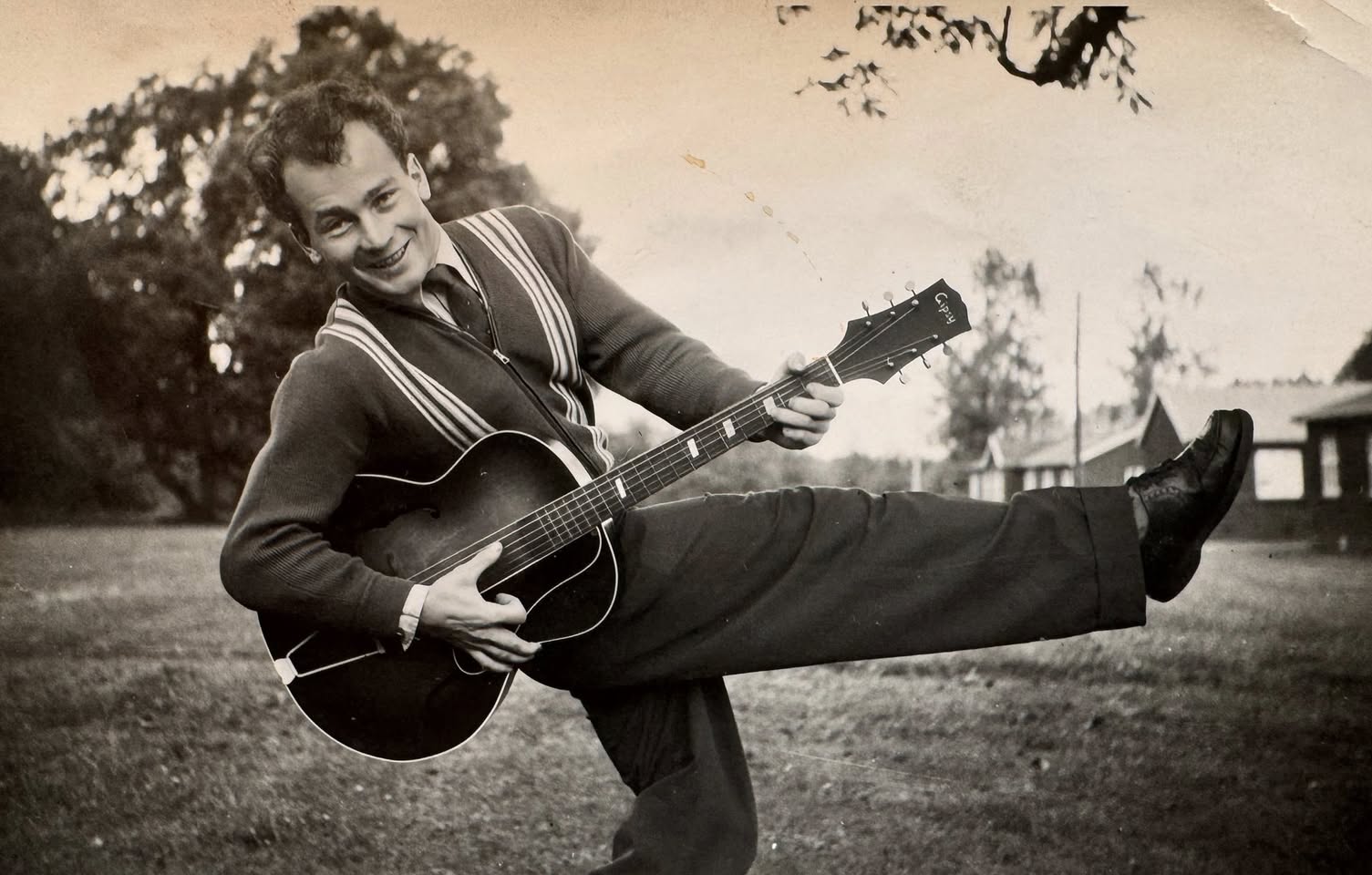
Erno (my Dad) always wanted to write and publish a book about his life. He was famous for the stories he would tell about his youth in Hungary, but writing it all down was not as easy as he had hoped, especially as he aged.
The Legal Immigrant
Intro
To my dear wife, children, grandchildren, relatives and all those friends, who kept on bugging me to write down my (sometimes, like never ending) life stories.
I hope you are happy now and I hope you will find enough time and energy to read it all, chuckle at my attempt to relive some of the part of my life that was funny and I have all very much enjoyed it!
With lots of love to all,
Grampa
Table of Contents
- Before my time
- Cziraki Papa
- The Race
- The Ghost of Pacsa
- The Early Years
- Starting School
- The War
- The Ghetto
- After the War
- Butchering the Pig
- The Harvest
- Cutting the Forest
- The Vine House (Pince)
- Picking Corn and Chestnuts
- The Rabbit Hunt
- The Greatest Snowdrift Ever
- The Christmas Tree
- Part II
- The Teen Years
- Fighitng for My Dream of Being a Pilot!
- Part III
- The ’56 October Revolution
- Addendum
- The Pacsai Gulyas Recipe
Part I: Before my time…
There are so many wonderful and intriguing memories buzzing around in my mind that I have problem picking the most interesting ones. I believe, I need to tell you about my early years and about other people, who were close to me. Maybe, I will just put down in plain, simple words, how I have seen the world through my own eyes and from the stories that I was told or was read to me. Some of the details are faded, the meanings of the words have changed, the colors are less vibrant and somethings that were closer then now seem to be far away. Still, I hope, my slowly fading and forever shrinking remembrance will help me recreate the pictures of my (our) life, the way it was then; simple, carefree, happy, wonderful and always loving!
Cziraki Papa
My Grandpa was Papa to me. Old, frail, wrinkled and always walked with a weathered, hand carved stick. We would sit in front of his kitchen door, which was also the only entrance to the house. I would sit on the bottom steps and he would sit on the top step, telling us stories of the “good old days”. I loved to hear him reminiscence of those days when the Czirakis were “rich and famous.” He had many grandkids. My mother had 3 sisters and 5 brothers, but for some reason Papa liked me the most. It was not just me who thought so; my mother told me that all the time! I would just sit there, listening to him, while petting and caressing his kitten. I never doubted anything he said. Once in a while he would poke me on my back with his two foot long, stinking pipe to see if I was paying attention. Sometimes, while he went back into the kitchen to reload or re-light his pipe, I would go to his garden behind the barn and pick some ripe berries or to chase the mean, loudmouth rooster that just would not move. He also had a few noisy, big and fat geese. They were mean and would chase me around the yard when I got too close to them.
Papa had many different fruit trees. One of them was a very tall golden delicious apple tree that I will never forget, only because I could never climb it. This tree always had old fruit hanging on the branches, even in the middle of the freezing winter. The apples were sometimes frozen, but still very sweet and delicious.
There were also walnut trees in the yard with smooth and slippery branches. It was easy to climb, but Papa did not want us to pick the walnuts while they were still green. “The shell is very oily and your mother will never be able to clean your clothes and you will never have clean hands ever again.” He would always say. This was pretty good advice, but we climbed anyway when he was not watching us.
I loved Papa, but I did not like it much when he tried to tickle the back of my neck with his long, greasy mustache that he was very proud of. Also, I hated when he started spitting at the hens and chickens that got too close to us. On colder days he would bring out smelly, dusty old blankets that I really did not want to use. His nose was dripping or running most the time, but he insisted that he was not cold and had never had a cold in his life.
The best were those days when he was baking bread in the big, clay oven in the kitchen. I would help to get the wood and he would let me watch the fire. After the oven got very hot, he would pull out the flaming charcoal with a long handle rake and put it into a metal bucket full of water. It was scary to watch the steam rise high and the loud, hissing sound of the water drowning out the fire. He would then take a long yard broom, wrap a wet towel around it and wipe the inside of the oven to get rid of the ashes. There was room enough for 6-8, large round breads to bake. I was always amazed to see how fast Papa pushed, one by one, all the heavy, round bread dough in the oven with the long, flat wooden shovel. As the bread was baking he would reach into the hot oven to move the bread around to make sure they baked evenly. After the bread was almost done came the best part of the day, baking of the “langos”! (Pizza). He would take some of the intentionally left over bread dough and rolled them out flat by hand to about ½ inch thick pieces. He would then sprinkle them with bacon fat with a small, feather brush. These were baked for the kids until they were crisp and slightly rubbed with a slice of fresh garlic. My, my, that was like being in Heaven!
I liked Papa’s many stories about the good old days, mainly, because he was always happy and smiling when he talked about them. He told one about how the Cziraki’s lost some of their family’s fortune, but retained their fame for being kind, fearless, mischievous and vagabond. This was one of Papa’s most favored one and it kept us sitting still and listening for a long time.
The Race
The second day of Easter was created for relaxation, good times and recovering from the day before. The boys would go around and sprinkle cologne and sweet smelling flower water on the girls, usually without retaliation. Poloske, a small, old farm town, was centrally located in Zala, where the Cziraki family was well rooted. For many years they were famous for their sometimes silly and foolish antics.
The Andrasy carriage was standing empty; the driver was inside the inn, working hard on finishing off his second bottle of the newly opened red wine. There were a couple of his friends intensely listening to his story about his escape from a hauling pack of wolves attacking his wagon the night before. He was showing how he kept away the wolves from his horses with his leather whip in one hand while gripping tight the reins in the other hand. He said they were going so fast that the wolves were falling further and further back and finally just gave up on the chase.
At the next table there were some skeptics who were also listening, but doubted the whole story. One of them was the young Cziraki who said that those old horses couldn’t outrun a turtle, let alone a pack of wolves. There was some shoving and pushing until the proprietor of the inn came over and suggested that they have a race to find out who had the fastest horses. They agreed on the date, the location, and the length of the course. “The winner takes all” said the half-drunk Andrasy and ordered another round of drinks for all.
The day was set for the next Sunday at noon and all the people were invited to watch. The next day, it was like a bad dream to come through for the loser, because there were not enough good horses and strong wagons available in the whole county, but it was too late to call the bet off.
It was a nice sunny day and the streets were lined with people. The kids were sitting on the side of the ditches, waiting for the race to start. The wagons were decorated with flags and colorful ribbons and there were lots of drink and food passed around. The horses were nervous, stomping the dirt, wanting to move. Both drivers were anxiously sitting on their benches, with the shiny, polished reins firmly wrapped around their arms, waiting for the starter’s gunshot. Bang and they were off, barking dogs and barefoot kids running and screaming with excitement. Just a few seconds later, they disappeared in the rising dust, with each side firmly believing that they were leading. There were some loud friends who tried to follow the wagons on horseback, but they were too drunk or lousy riders to keep up. The only thing you could hear was the noise and whistles in the distance, coming from the other end of the town. Then there was some noise in the distance. Everyone started to turn back the other direction, hoping to get a glimpse of the leaders coming around the corner. Someone went up to the church tower and began to ring the bell, which just added more to the confusion, more people were coming and wondering what was happening.
It did not take long; the Cziraki’s were without their horses and wagon, too proud to beg for forgiveness and too ashamed for asking for sympathy for the family. The only thing they could do to get new horses and a wagon was to sell more of their land. Papa’s story was trying to explain why the Cziraki family’s fortune was shrinking and why we were so poor.
The law of the land called for the oldest male to inherit the family fortune. He was the one who would decide if the land was to be sold or if it was to be divided between family members. Papa used to smile, wink and say, “I never wanted anything that required me to work, that’s for the ones who want to be rich.” He truly enjoyed the work he liked and hated the ones he did not like. I was 5 years old when he peacefully passed away, but he left countless memories carved deep in my heart. My Mom let me go and see him after he died. For many years I really believed, as he was laying there pale and silent, that he winked at me as I was saying goodbye.
The Ghost of Pacsa
Papa was not a very religious person, but he believed in ghosts, or at least, that’s what he always told us. His scariest story was the “Church Tower Ghost,” a story that, according to Papa, was really true and actually did happened.
Pacsa had a handful of craftsmen who were always bickering with each other over many issues that only they could think of. Many times they got into terrible fights over who said what or who did what and why. The blacksmith was a big, strong jackass, who was always picking on the watchmaker, who was a gentle, soft-spoken, and skinny man. The watchmaker built the church tower clock that was going on 14 days straight without needing rewinding. The blacksmith also contributed to the clock. He made the heavy weights that controlled the movements of the clock. They lifted the clock up into the tower by four big men pulling ropes connected to giant wooden pulleys. There were hundreds of onlookers in front of the church, cheering and hollering as the watchmaker started up the clock and set the time. They had a big celebration with lots of wine and “palinka”, but before long the good times ended as the blacksmith became jealous. The watchmaker was getting most of the congratulations and back-patting, and the blacksmith was feeling left out.
“Hey, that clock would not work without my weights!” he screamed angrily as he left the party. He would not talk to anyone. He turned over a chair and cussed at some people who were trying to slow him down.
About two months later, just after the Octoberfest, some friends saw the two men talking to each other about the clock, which was working without any problems. As usual, the blacksmith was a little tipsy, but they parted without any harsh words. The watchmaker left to visit some neighbors and headed for home. Unfortunately, he never made it. His wife and friends found him next to the road, beaten to death. Everyone suspected the blacksmith, but the police could not prove anything. Nobody had seen him leaving the party and there were no markings on his body suggesting a fight. They could not lock him up without any evidence of the crime. The only evidence was his crumbled and twisted bicycle in the bottom of the roadside ditch, which laid there reminding and accusing him silently.
Three days later, the watchmaker’s casket was taken to the church for a blessing and the last rites. There were a lot of people in the church, some even overflowed outside in the garden. Inside, the priest was walking around the casket, blessing it with holy water. The organ was very loud and everyone was singing. Suddenly, there was a hushed murmur that saturated the crowd as the blacksmith entered the church and kneeled in front of the casket. At the same time, for some reason, all the pigeons and other birds flew out of the clock tower windows, making a screaming, screeching racket around the church windows. There was an eerie feeling spreading through the crowd as they started to move away from the pale, muttering blacksmith, creating a gaping void, an empty, eerie circle in the crowd.
After the ceremony, six pallbearers lifted the casket and slowly proceeded to carry it to the waiting wagon in the street. The crying, somber family followed the casket through the watch tower doors and down the narrow stairs from the church. After the friends and neighbors slowly followed, there was a pause, as the blacksmith also started to leave the church. The gap became bigger around him. Nobody wanted to walk next to him on the way to the cemetery. As he got under the tower, a terrible, rumbling noise horrified the crowd. The ground was shaking, the birds were screaming and flying wildly around the clock tower. The pallbearers dropped the casket and it broke open as it hit the ground. There was a dark cloud of grey dust under the tower surrounding the entrance to the church. For an instant, it was totally, deadly quiet.
The priest was the first person to crawl over the rubble to see if anyone was hurt. “What happened? Is every one ok?” he cried loudly. He was getting some help to clear the fallen piles of bricks and mortar that was blocking the entrance, when one of the helpers uncovered the bleeding face of the blacksmith. “He is dead. The basted is not breathing.” That was the only comment the other man made as the priest was giving him his blessing and his last rites. Lying next to him, half covered in the thick dust, was the bloody, 200 pound weight that fell from the tower clock. The priest looked up through the gaping holes in the tower, made a sign of the cross over his heart, kneeled down and started praying.
One of the pallbearers walked back from the wagon, pale as a freshly washed sheet, shaking and stuttering. “The watchmaker is not in the casket. It cracked open as it slid off the edge of the wagon, I looked twice and I cannot see him.” He looked up through the dusty hole at the silent, motionless clock, crossed his heart and solemnly declared, with a quiet, quivering voice, “He is UP THERE”!
Within minutes the whole congregation has dropped to the ground, crying, praying and praising the Lord. The priest walked to the street where the split casket was laying and looked to see if the body was really not there. “He is in here, the body just slid back when you dropped the casket.” He said to the shaking, weeping family standing around the wagon, but nobody listened, just stood there like if. He then sent a young man on a bike to fetch the police.
“We need to continue with the funeral and bury the poor soul” the priest said and hoped the possession would continue to the cemetery. But only the family followed the wagon, everyone else just stayed put and slowly wandered around the church. The policeman was trying to write down what happened but too many people were talking at the same time. They all said the same thing as they pointed up to the clock. “Look at all those birds, they just flying around and none of them go into the tower.” One said. “Yeah, because he is in there!” whispered another.
“Be quiet” said the policeman, “There is no ghost up there!”
But just as he spoke there was some rumbling inside the tower, a few more clay bricks came crumbling down. “All people move back” commanded the police, but there were no need to say anything. They were all running away, mumbling and shaking, holding each other.
The church was closed for five days while the repairmen fixed the tower ceiling and hung up the heavy weights on the clock again. They tried to start up the clock and set the time, but after several unsuccessful tries, they left the tower. None of the birds came back into the tower, they just flew around screaming wildly. One of the workman said he did not believed in ghosts, but he could feel the ghost “breathing down on his neck” and he swore he would never go up there again.
By the next Sunday, the church was cleaned up, painted and full of flowers, but nobody came to the mass. The priest requested the bishop to come to the town to bless the clock tower, so the watchmaker’s soul could be let free to “rest in peace.” All of the people were invited to a special mass to sing and pray for the Holy Spirit to bring peace back to the church. The priests walked around the tower, sprinkling holy water on the walls and swinging the lamp, raising the thick, gray holy smoke up the tower. Everyone was on their knees, watching, singing and praying.
All of the sudden, there was a strong breeze at the top of the tower and a gray puff of smoke appeared floating away toward the sky. “There he goes!” said someone in the hushed crowd and a sigh of relieve settled on the crowd. “The clock is going again” cried the bell ringer and a few minutes later most of the circling birds also returned into the tower. “Glory be to the Heavens” declared the bishop, lifted his arms high and invited all the happy, smiling people back inside the church.
The Early Years
The other day my youngest grandson asked me to tell him a story about my earliest memories of my own childhood. I distinctly remember one not so pleasant incident that happened way back in one of those quiet warm, lazy summer days when there was nothing to do around the house.
I was maybe just over two years old, desperately trying to stay out of any, always lurking trouble. I was quietly playing with a small stick, making circles in the dirt in the back of the yard. My mother was sitting on a small bench by the well, trying to feed my baby sister and talking to her with that happy, giggly language that only babies understand. I had on my new, gray canvas overalls, that had a slit in the back to let you crouch down to go potty by yourself, without anybody helping. I just kind of needed to go, but I just wanted to finish the circle that I was drawing. But all of the sudden the urge to go got a lot stronger and I had to go NOW! I dropped the stick and started to run toward the garbage dump, by the pigstay in the back of the yard. Mom looked up and laughingly urged me to run faster, but I could not and I was unable to hold it any longer. My new pants got soiled, my legs had poops on it and I started to cry. Mom put the baby down and came over to console me and clean me up. She was not mad at me; she just took the dirty pants off, grabbed a rag off the fence, dipped it in the bird bath to get it wet and started to wash me down. “Shish” she said to stop my crying, “It’s ok, we’ll wash the pants later”. She hugged me tight for a few seconds and then let me run around with my bare butt for a while. I was happy that I did not get yelled at and I didn’t even mind that she went back to feeding the baby.
I also remember the days when my aunt Terez visited us in 1938. She lived in America and she was very rich. She had a two story house with 3 bedrooms. She brought us lots of presents and gave my Mom a lot of money to build our new house. We went to have our pictures taken with Ant Terez in a photo studio. Later she took us on a bus to visit our relatives in Heviz, where we could go bathing in the hot, stinky sulfur lake. I was a little afraid of my aunt, partly because she and my father had a big argument over the money she gave us. This made my mother cry and I did not like that. My Mom was a very sensitive person and she cried easy and often. Also, my Father would get mad, drink too much wine and become mean to all of us. I think I was happy when my aunt Terez went back to Detroit in America.
Not having electricity and running water did not bother us, neither had anybody else in the town. We took a bath in a big, wooden tub that the gypsies carved out from a willow tree trunk. Mother would heat up water in a big pot on the kitchen stove and poured it in the tub. We had to stand back and wait until she tested the water temperature with her fingers. She would splash the water around and if we were too close, she sprinkled water on us too. She would put both of us in the tub, gave us a big brick of soap and remind us that if we were not clean she will do the scrubbing! We did not like the smell of the home made soap, so we definitely did not want to be scrubbed down again. Once I watched my Mom cooking the soap and it was not a pleasant experience. It took a long time and it smelled terrible.
We had a deep well in the yard that had very clean, tasty and always cold water. I was very young when the diggers came over and started digging the well. The hole was wide and deep and after a couple of days there was a very big pile of dirt next to it. One of the workers, a young boy, was wheelbarrowing the dirt all day long to the back of the garden. I was not allowed to get close to the well, but I was allowed to play on the pile in the garden. They built a lift that they used to lower the workers and brought up the dirt. They did not stop until they hit water in the well. The celebration was very short because the water was coming into the well and it had to be pumped out to allow the inside wall to be tiled with sandstones. My Father got the honors of cranking up the first bucket of water, but we were not allowed to drink it for a few days. We had a very good well, although, sometimes in the middle of the summer the well would dry out and we had to bring water from the town well. It was quite a distance away from our house, but I did not mind going there to fill the buckets. There were always a lots of other people there doing the same thing. I liked to listen in on the grown-up’s discussions and play a little with the neighbor kids. There were days, when I got into trouble for staying there too long and forgot that Mom needed the water for cooking supper.
Starting School.
After those wonderful, carefree and fun-filled childhood years a lot of things changed. Most importantly, school stated! I do not remember too much of my kindergarten year, but I know I spent a lot of time with my cousin Aranka in a play, singing and dancing with her. My Father had a wind-up record player that he loaned to the school for the play. I was proud of the fact that it was the only one in Pacsa and it was ours! It has never bothered me that this may have been the only reason that I was selected for the play! We did not have many records for it, but we played it so much that I learned every one of those songs forever. Once in a while, my uncle who lived in Budapest, brought us a new record of the latest hits. Those were played until they became so worn and scratched that we could not enjoy them anymore.
The first year in elementary class was scary and exciting. I did not know anything about my teacher and had never seen her before. She was very young, pretty and smiled a lot. I think I was in love with her in the first day. After the class was over I ran home to tell my Mom about her. She just smiled and told me to pipe down and drink my milk. I was a little bit disappointed that she did not ask me more about her. I did my chores in the back yard and anxiously waited for my Father to come home for supper. He was late and had too much to drink and Mom told me not to bother him.
I went to bed, but I could not go to sleep for a long time. I just rolled around and waited for the sun to rise, thinking of what will I say to her in the morning.
Next day Mom packed my sandwich in wax paper and put it in my backpack. She gently patted my butt and warned me to be good. I started running toward the school, but slowed down as I caught up with Jozsi, my friend, who I shared our desk. We did not say much and I was afraid to say anything about our new teacher. She was already at the class door, waiting and said good morning to us. She put her hand I my shoulder and gently guided us toward our desk. I don’t know and don’t remember what we learned that day, but I am sure I will never forget her hand touching my shoulder. For some reason, I always liked my teachers, but none of them ever came close to her.
After the second grade we got a very tough, but kind, male teacher. I got into trouble with him over reading books during class. He kept me after school and I thought I was in deep doodoo. But he was just curious and wanted to know what I liked to read. A few days later he gave me many wonderful books to read and I just had to return them in a good condition. After I pretty much read most of the books in the small school library, I got many, many more books from people in town, who heard that I loved to read. Even my Father left me alone if I was reading. There were times when I got out of doing work because I had a book in my hand and I was reading. My sister was complaining to my Mom that I was not doing anything, but she just looked at me with a soft smiled and nodded approvingly and sad “ He loves to read!”
Most people that I knew asked me the same question, “What are you going to be when you grow up?” I know my Mom always wanted me to be a doctor. One evening she had some of her sisters and friends together in the kitchen to have a real séance, that is, when you ask some ghosts to tell us the future. She also invited an old gypsy woman to set up the table. They put a black cloth in the middle, lined up seven lit candles on it and six women and me set down and put our hands on the top, with only our finger tips touching to table. I was kind of doubtful and a little afraid of the whole thing, but anxious to see what would happen. Each one of us was allowed to ask one question and if the ghost would answer, the table would move and tap the floor 3 times. The gypsy woman mumbled something like a prayer in Romanian, and then asked my Mom to start. She whispered a nervous question with a shaky voice, “Will my son become a doctor?” We waited quietly for a few seconds and then I felt the table move. It slightly lifted up and tapped the floor three times! Everyone was quiet for a few second, then my Mom gently hugged me and kissed me on my forehead. She whispered, “See, I knew that!”. I had enough of that and scooted off to my bed. I could not go to sleep right away and listened to women giggling and carrying on for a long time.
The War.
In 1941 things started to change. Germany began the war with attacking Poland and also overran Hungary with their “blitzkrieg” mechanized units. In two weeks, the Hungarian army units capitulated and we started to see German soldiers on motorcycles, tanks and armored trucks all over the roads.
After school we would go to the end of our street, climb to the top of the hill and watched the endless columns heading toward the Eastern front and Russia. It did not take long for the stone and gravel road to get soft and some of their trucks got stuck in the deep mud. There was a lot of commotion as the Germans tore apart the farmer’s wooden fences to shore up the road. They were hollering at each other, the solgers in German and the farmers in Hungarian. Neither side understood what the other side was saying. Needless to say, I got home late and got really cussed out by my Father. Mom was just standing there, looking sideways, without saying a word. I was told to cut through the neighbor’s back yard and the soccer field to avoid the traffic on the road. The soldiers were really never mean to us, but Mom did not want us getting into some trouble. The school was right on the main road and we could hear the tanks rumbling on all day long. Sometimes they were so noisy that we could not hear and understand the teachers. Later on we learned about the air raids and were told to go in the Church. It would be safe there, because the Americans would not bomb the church.
Usually my mornings started off with feeding the geese and the chickens before I got ready for going to school. I was throwing dry bread, potato peels and some corn on the ground in the back of the yard, trying to get some feed to all of them. As I spread the food the geese and ducks were very loud and chased each other, fighting for more, I turned to look back toward the house and watched as my father was running franticly toward the front gates. As I walked back to see what was happening, I noticed our neighbors from the store in town were standing there, screaming. They were crying and sobbing loudly about something the Germans were doing on the main street. I was leaning against the gate as they were trying to explain to my father, that the SS solders broke into all the Jewish stores in town. Although we were not Jewish, they included our store with the rest of them. They broke the doors and windows open, busted everything inside and threw all of our stuff into the street. My mother also came out of the kitchen, listened for a while and told me to get back into the hose. Then my little sister has also came out, crying and hanging onto Mom’s apron. Father was very nervous and excited, screaming at my mom to take us back in the house, because he was going to hop on his bike to go and see what really happened. Mom wanted to go with him to help, but the neighbors were saying don’t, because the SS are still on the streets.
I was also begging to come along to help, saying that I was not afraid, but we had to stay with the neighbors.
A short time later, father came back with his bike loaded up with merchandise that he managed to pick up from the street. I could see on his eyes that he was crying and he did not say much. He asked us not to go to school and also said I may have to help him a little later to salvage what’s left from the store. He told the neighbor that lot of the stuff was already missing, or stolen. He kept on going back and force all day and mom stayed there to watch what was left in the busted up store.
Later on, we got some of the merchandise back from the town folks with the explanation that they just wanted to save it for us, and keep it from the “thieving” gypsies. We also got a visit from the Germans, who apologized and said “We are sorry, we thought you were Jewish.” To me, they did not look like they were sorry at all. I watched them as they were leaving. They were talking and laughing loudly as they were leaving outside the gate. True, we were good friends with most of the Jewish merchants and one of my best friends, Andras Ritter, was Jewish. We played at his house many times and stayed over with him on some of their holidays. But if we went outside Andras also had to wear his shirts and coats with the yellow star or he would get into trouble. Some of the other kids did not want to be with me, because I played with Andras.
The Ghetto.
A few weeks later the Germans started to round up all the Jewish families they could find in Pacsa and from the surrounding towns. They enclosed the backyard of the biggest Jewish home with an 8’ tall wooden plank wall and nailed a rolled barb wire fence on top to discourage anyone from climbing over it. The home was converted into a German guard house and the gate was enlarged and reinforced for trucks to drive in and out of the ghetto. The stable and the barn were converted into barracks for the Jews to sleep and live in. The Jews were only allowed to bring some bedding, covers, clothing and a few select personal items. Most their things were taken away by the guards. They were told not to bring any food, “You will get food three times a day,” promised the German commandant.
There were no problems for a few days, but by the weeks end, there were too many people in the ghetto. The guards hired some of the women in town to help with the cooking, but after a few days there were some problems and they did not let anyone in the ghetto.
One of my school friends, Jozsi, lived just behind the ghetto wall and we would go through their barn and listen to them talk and pray. His mom would tell us to be careful, because if the Germans caught us, they would shoot us. When my mom found out, at first, she was very furious, but later she gave us some cooked potatoes to throw over the fence while the guards were not watching. We felt very sorry for the people begging for food and we went out to the fields to dig up some raw potatoes and some green apples to flip them over the wall. We did this a few more times, but after one evening we almost got caught, we got scared and had to stop. There were more trucks coming every day and the ghetto was getting full with women and children. They dug a deep latrine that was getting terribly smelly and even the guards would not go back there. One of the cooks was telling stories about some of the Jews were sick and dying, but nobody was allowed in to help them. There was also less food coming to the ghetto, because the German soldiers collected everything from the farmers, they had nothing left. Most of the horses and cows were gone and the soldiers took the pigs out of people’s backyards. We hid the few chickens that we had in the house and only let them go outside when there were no soldiers around.
There were rumors spreading of the Americans coming soon and the Germans put machine guns on the roof of our school and on top of the church tower. But nothing happened, there were only more and more bombers flying overhead toward Budapest.
I liked to watch them steaming up the sky with white stripes. It was unbelievable the way they kept on going, even when the German fighter planes were attacking them from underneath. My mother was screaming at me to get under the eaves of the hous, because the falling spent shells were breaking the clay shingles on the roof. The German grass airfield was only 4 miles from our house ans Dinci and I used to sneak out to watch planes land and take off the field. They did shoot down several bombers and the farmers captured 12 pilots who parachuted out of the falling, burning planes. Later, there was a big celebration in town with a military band and the German fighter pilot got awarded the iron cross. They were all dressed up in shiny uniforms. One of the pilots let me touch his fancy dagger that I was curiously eyeballing. He said something in German, but I did not understand it and he just laughed and tapped me on my head.
Later in October, there was a Hungarian plane that flew very low over us and tried to land, crashed in an empty field. The plane turned end-over-end and the pilot died. We found out from the neighbors that he was the doctor’s son and he was planning to fly his family out to America. He was buried in the cemetery and the plane was pulled by the farmers to the back of the soccer field. It was there for more than a year and we played in it, pretending we were flying it and we were shooting down the bombers. We could move the flaps and the rudder and it smelled like it was real. Some people removed most of the instruments, but for us it did not matter, it was real. We found an old blanket in the field that we made into a parachute and played “pilots” for hours.
Things changed a lot as the fighting was getting closer to us. Our school was made into a hospital and we had classes in a big barn, even though there were not many students attending. The Germans took my father away to a work camp to build tank traps on the Russian front. A lot of the people left town and moved into their wine cellars in the mountains where they thought they would be safer. But the Germans moved some of their really big cannons to the highest points in the vineyards and the whole area was filled with deep bunkers full of solders and guns. We did not go to our cellar until the war was over, mainly because my father was not home. When those gigantic guns fired their rounds, the ground would shake and you could actually see and feel the bullets flying overhead. They whistled for a long time and then you could hear the baffled explosions when they hit their targets. The windows rattled in the house and the rooster would just go crazy in the yard. My mother would make me round up all the chickens we had left and lock them in the hen house. She was afraid they would fly out of the yard and we would never see them again. We had no more ducks or geese; we ate those a lot earlier. Most of our valuables were put in a big wooden box and buried deep under the brick kitchen floor. We knew the Russians were getting closer and we hoped the war was ending soon. The ghetto was closed and all the Jews were moved out and loaded on a train heading toward Germany. The hospital was also emptied out and the Danish nurses who worked there all left with the wounded soldiers. After the last tank rolled across the bridge over the canal at the end of the town, they blew up the road and the bridge with dynamite. After all the rumbling and loud noises, there was a very scary, nervous wait, nobody knowing what will happen next. We just sat together on our bed and prayed for a long time. There were a lot of terrible rumors spreading aboyt how the Russians would rape all the women, shoot all the barking dogs and take everything you have. My mother put on some old, smelly clothes and tried to fix up her face so she would look older. There was no vehicles going outside, all was quiet, but she would not let me look out the window. We waited a little longer, and then someone was yelling outside, asking in Hungarian, if any Germans were in the house. My mother went to the door, me and my little sister hanging onto her very tight, opened the door slightly and cried out with a shivery voice, “No Germans here”. Then as we peeked out, I saw two Cossacks on horseback circling the yard. They said something in Russian and just hopped over the fence into the neighbor’s yard. They had swords hanging at their sides and machine guns across their backs. We heard some gun fire and explosions in the distance, but otherwise there was quiet. We closed the door and went back in the bedroom and just sat there for a long, long time. Mother started to cry a little, muttering something about why my father was not here. Soon, my sister also joined in with her whimpering, but I was just curious, wanting to see what was happening outside. Then the next door neighbor knocked on the door, she came over to check on us and talk a little. I was allowed to go outside, but I had to “…stick around…just here…”
There were some Russian soldiers talking to an interpreter and asking if the Germans dug mines into the roads. They were assured the town’s streets were not mined; the Germans were moving fast and did not have time or enough explosives. The Germans left a broken down truck in the middle of the road to block the advancing Russian tanks, but they just pushed the truck into the ditch and kept on rumbling after the Germans. Several trucks full of solders parked their vehicles in a big yard next to the soccer field and set up camp for a long stay. They built a big bonfire every night and sang beautiful folk songs and danced in circles around the fire. We were allowed to watch and listen and they even shared their rations with us.
A few days later, a big truck pulled over in front of our house and a man, who looked like my father, jumped down off the back of the truck. I was standing in the front yard, watching as he picked up a bag the solders threw down. I did not know what to say or what to do. I started crying and ran into the kitchen, where my mother was cooking dinner. She looked at me and softly asked what was wrong. I just started muttering and pointed outside, the only thing I could say was “Father.” She dropped the spoon and flew out the door toward the front gate. I just stood in the kitchen, watching my sister playing with her doll and waiting for my Mom and Dad to walk through the opened door. It took them a few more minutes to come into the house and the Russian officer and driver came in with them. Mother took out some wine and food from the pantry, but they did not want anything to eat or drink. Instead, they gave us warm blankets and food and asked my father to see them the next day for a job. I saw that same officer come by many times on his horse and he asked if I wanted to ride. I politely declined, as I was afraid of horses. He laughed and tried to pick me up, but I slipped out of his hands and ran away. A couple of days later I told him my story, why I did not want to ride on his horse.
Two doors over, just east of us, there was a big apple orchard. The farmer had several horses and sometimes he would let them race around in the yard. One day in the fall, Imre, my cousin came over to play with me. We were running in circles behind our house, pretending to be cowboys and Indians. A little later we got thirsty and Imre suggested we climb under the wire fence to get some green apples that had fallen off the trees. We had done that before and there was a spot under the fence where we could get into the orchard. I got down on my stomach, Imre was pulling up the wire and I started crawling slowly and carefully to the other side. About half way through I felt some thumping on the ground, as I lifted my head up I looked straight into the big, brown eyes of the biggest horse I’ve ever seen! My cousin let the wire lose, that snapped hard into my back and I could not move anywhere. The horse reared up on his hind legs, shrieking and snorting like a wild beast and I was sure I was going to die. I kept on screaming for Imre to pull up the wire so I could wiggle my butt back into our yard. I was sure my head was going to be smashed potatoes by the massive beast’s front hoofs. I don’t know how long it took for me to crawl back, but I know I did not take a breath until I was safely on our side of the fence. Needless to say, from that moment on, I was afraid of and have never liked horses! That picture of the rearing horse above my head will stay etched in my memory for ever.
Father got a job at the bathhouse, keeping it clean and the water warm. There was no electricity and running water in Pacsa, so it was quite a job to hand pump the water from the well and constantly feed the fire in the boiler. There was no money, but the benefits were great. We got some food and wood for our kitchen. We were not the only ones with very little to eat, half the town was begging and scrounging around for something to eat. We would go into the forest with the neighbors, who knew and recognized the edible mushrooms, and come home with food for days. The poisonous mushrooms were not the only danger, there were also lots of live grenades and other ammunitions left over from the war. We did not dare to go deeper into the woods for fear there still may be some German solders hiding there.
Maybe the proudest moment in my life came during an outing to dig up still frozen potatoes in the fields. It was a nice, warm day in early May and Mother gave us a couple of woven willow baskets to fill up with potatoes, as much as we could find! We walked crisscross in the wet, dirty fields and dug up quite a few potatoes to fill the baskets. We stated to turn around to head back home, when one of the boys came up with the brilliant idea to go to the canal and wash the muddy potatoes and our feet. We took our shoes and socks off and climbed down to the water. It was a little deeper and colder than we anticipated. The concrete bridge was blown to pieces by the Germans and the cement boulders blocked some of the water flow in the canal. It was getting deeper and deeper and I started to shiver a little. Suddenly, I felt something touching my ankles. I stood still for a few seconds and looked down as deep as could to see what it was. I really hated snakes, but I was amazed to see a large school of beautiful, yellow belly perch swimming around. I was trying to be quiet, not to move much and motioned to Dinci to dump the potatoes out of the basket. He looked at me confused, did not know what was happening, but passed me the empty basket anyway. I carefully lowered the basket between my feet, until the lip was in the mud, at the bottom. The fish scattered first, but as I watched, they slowly started to return. They nibbled on my skin, swarming around and finally their curiosity took them into the basket. I waited a few more seconds, then tilted and lifted the basket out of the water with a quick, firm motion. There was a lot of big, fat fish jumping and squirming in the bottom! We dumped the fish on the grass and went right back to do the same thing again. Eventually, we had to splash the water to move the fish our way, but we filled both baskets with beautiful perch. Imre filled up his shirt with potatoes and went ahead of us to tell everyone what we found. By the time we made it back to town, there were a lot of cheering people on the road, coming toward us. We were surrounded by many, whom we didn’t even know and gave away most of our fish. By the time my Mom got to us, I had only just a couple of fish left. I really felt bad about that, but my Mom was very understanding and happy for me, hugged me tight and with a teary eye, she called me her real hero!
After the War.
The war was wherry cruel on our family. We lost our Father’s youngest brother, my 15 year old cousin Jeno and and Jozsi was captured by the Russians and send to Sibaria for 10 years. Right after war ended, the economy crumbled in Hungary. Inflation got totally out of hand and the money became worthless. The price of a loaf of bread went from 3 Pengo to 3,000 Pengo in one week. There was no end in sight, as the price of food and everyday merchandise rose uncontrollably high. People did not take or want money for anything. The Pengo became worthless and as they stopped printing money all together. We all became millionaires; a day’s pay was 30 million. Bartering became the only way to get anything or pay for any services. There was nobody who would take money for any payment. The government had to change the currency from Pengo to the old name Forint. It was quite a mess foor a while, but finally the people acceptedamd used the new money.
The next door neighbor’s son had a very nice, older accordion that I always dreamed of owning someday. I never had enough money to buy it. One evening he let me play it for a little and I told him that I would trade my brand new pair of shoes that my Father made. (They were too small for me and hurt my feet). I also offered my cowboy pants (that I knew he really liked) for the accordion. He agreed, my mom approved and so I ended up with the accordion. I was in seventh heaven and in no time I learned how to play any songs! I would sit on the steps by the front door and play until my mother would tell me it was time for bed. Although I never learned to read notes, I was getting pretty good at playing the songs that I learned from my Mom. There was an old lady in town who was a music teacher, but that was only for the rich people. We could never afford that. “Maybe later, when you go to High School” Mom used to say. “Just keep on practicing as much as you can.” Later on, I would take my accordion to play at parties, where the older kids would sing and dance to my music. Sometimes, I even got a little money for playing. My Father really liked that! “You can make a good living with that” he would say, but I knew he was kidding.
I always knew I had to go to school because my mother wanted me to be a Doctor! You really don’t know what you want to be as you getting older, but I did not tell her that I didn’t want to be a doctor. I can’t stand the sight of blood! I always liked going to school and I loved reading. There were not many books left in the school library that I had not read and people were always bringing me books to read. There were times when my father told me to put down the book and do some work around the yard, but my mom would tell me to just keep on reading. Little did I know then, how much that reading would change my life later on!
I started fifth grade in the fall of 1944 and also began learning German. Our teacher was also the school principal and he was fluent in the German language. He noticed that I started to talk to the other kids in German, just for fun and he helped us make up a German Club. We also had other things to learn, but I enjoyed the language the most. Later the school was turned into a military field hospital and we had to meet in a big hall that used to be a barn. We moved all the books, desks, chairs, chalkboards and everything else with a wagon and everyone carried supplies all day long. Some of the classes were put together in one part and another a little farther apart. We had a canvas wall so we could hear everything that the other teachers were saying. It really was a mess and a lot of kids dropped out of school. Also, the American bombers flew overhead all the time and it was very hard to pay attention to the teachers. After Christmas there were just a few kids who stayed in the school all day. We could actually hear the sound of the dreaded Russian “Stalin Organ” rocket launchers’ in the distance. Those were the most hated and feared weapon we ever heard of. There was not much traffic on the roads, only the German ambulances that kept on coming with more and more wounded soldiers from the front. We watched from a distance as the nurses and an orderly moved them into the old school. A lot of the soldiers did not make it out alive. The priest was the busiest visitor to the hospital.
One evening my Mom invited a couple of nurses for dinner and they told us that they were from Denmark. They all spoke German and I had a chance to practice my German that I learned. My Mom was very proud of me that I could talk with them a little. We had a good time and I never dreamed that one day I would see and live in Denmark.
After the war was over, we moved back to the old school building and finished fifth grade. We could smell the hospital odor for a long time. A lot of things were changed as they added seventh and eighth grade to the requirements. There was a lot of discussions on changing the language from German to Russian, but they could not find a qualified teacher who new Russian.
I kept on reading any book that I could find and joined the Democratic Youth Movement, where I was involved in everything that was available. I was also a Pioneer, a youth organization, which replaced the pre-war Boy Scouts. In seventh grade I received an ”Excellent” grade in all subjects and was sent to a Zala county Pioneer Camp for two weeks in the summer. That was very nice. I met a lot of nice kids and played a lot. It was definitely better than working in the fields that were waiting for me at home.
I also received two weeks of vacation in the Pioneer Village in Budapest that was really a lot of fun. My job was in the telephone center plugging in phone jacks and connecting callers. I met a lot of Austrian scouts with whom I could speak in German. We exchanged our scout pins, hats and ties for forever friendship.
Butchering the Pig.
The butchering of a pig is a huge celebration. It smells up not just the kitchen, but the entire neighborhood. It’s called the “Disznotoros”. (Pig roast). It usually happens in late November, when the ground is dry and, let’s put it this way, it takes a lot of effort of lot pf people to kill the pig. There’s usually food for your family, neighbors, and your extended family for many months to come. They get together early in the morning and put down dry straw in the back yard to burn the hair of pig. First, the pig’s hair has to be burned off. Then the pig gets sliced up. My uncle was good at killing the pig because he had the knife. Four people would hold the pig down while he swiftly cut into the pig’s chest. One of the ladies would then bring out a flat pan to catch the blood from the pig. This is a gross chapter, no? The blood was saved for cooking and making blood sausage. After the pig was dead, my uncle would pick it up and put it on the straw pile, sprinkled some straw on it, and put it on the fire. The intent of burning the dry straw was to crispen the skin of the pig, but not to burn it. Us kids, we were allowed to taste the tail of the pig and the tip of the ears when they were almost done. We were allowed to watch the straw burn down, which only took a few minutes. After the fire went out, they removed the pig and scraped off the remnants of the ashes and hair that was still on the skin. Then they lifted the pig on a large table and immediately began cutting up the pig. The front and hind legs were removed first. And the head was removed next. That was just about all that we were allowed to watch. The men would send us away to play somewhere else.
This whole process takes almost half of a day. In the kitchen, the women are processing the meat as the men slice up the pig. There’s fire under two or three of the big cooking pots and some of the meat is sizzling rapidly. Almost all parts, from the ears to the toes, are processed for food. Not all of it is eaten right away; some is saved for later. After the bacon is sliced, they chop it into small cubes and start to cook it. In the cauldron, the cooking bacon is very hot! It needs to be stirred with a long, hard wooden spoon. The fat collecting in the bottom of the cauldron is put into tall tubs so that it can be saved for cooking later on. Also, 3 to 4 inch cubes of the previously roasted meat are put inside the tall tubs and covered until they’re totally cooled off and the lard hardens up. The women also clean the inside of the pig for sausages. They clean the intestines and they cook them with a special tool that fills them with precooked bread, rice, and tidbits of meats and seasoned with paprika, garlic and lots of salt.
Some of the meat gets fried, some of the meat gets cooked and some of the meat gets eaten fresh! Some of the meat gets processed to be smoked in the chimney. The inside of the chimney is accessible through a small metal door. There are hard wooden rods in the chimney where the meat is hung to be smoked. It takes about six week for the smoked meat to be considered “finished.”
I should also talk about the wine. There’s a lot of wine being consumed in this celebration, even while they’re cooking. They drink from 10 in the morning and they go until 6 o’clock. The evening meal is one of the largest and eagerly anticipated events of the year. There are a lot of little bits of meats that the kids are allowed to taste while they’re cooking. We used to hang around the kitchen to wait for freshly cooked little meats that we could enjoy. Sometimes we would get in the way. “Go somewhere else!” the women would command, and we would have to leave the kitchen. We didn’t have any dogs, but usually there are dogs around who want our scraps too!
There is no clean up, well because everyone is passed out drunk, but they just left it. The women wouldn’t let the men clean up because they thought they’d break everything!
The Harvest.
Wheat and rye are the bases for living because they are the bases of bread. The wheat fields are very hot and dry during the summer. As the straw dries and the grain ripens, comes the time for harvest. Working with the straw is very painful. The thin, sticky hair on the head of the wheat is very uncomfortable as you gather it under your arms. Collecting the cut wheat from the fields usually is done by cow-drawn wagons. The standing wheat is cut by men with very sharp metal scythe. They’re called “kaszas” One of the most skilled and dangerous operations of harvest is when a man has to sharpen the blades of the scythe. The sharpening stone is 2x8 inches long and you have to, very carefully, slide the razor sharp blade along it because it can cut your fingers right off. Usually, the men do not sharpen their scythes until they’re 16 to 18 years old. Not because they’re not careful, but because they’re mother would kill them if they tried doing it. My father got almost thrown out of the house because he tried to teach me how to do it. These scythes have a wooden rake mounted over the blade that lays down the wheat as its cut. The cut wheat is collected in bundles that are picked up by the wagons. The bundles are tied with straw ropes that twisted under the wheat pickers’ arms. It’s one of the worst procedures in harvesting, and it’s almost entirely done by women. By the end of the day, they have red, raw skin under their arms.
The bundles were stacked into a straw bale as tall as the house. The machine that separates the grain from the straw is called the Thresher. *picture of thresher?* The thresher was driven next to the stack and the tractor that drove the thresher was about fifty feet away. There was a ten inch wide leather belt from the tractor that turned the beater drum on the thresher. The wheat bundles were passed down with a pitch fork to a girl on top of the thresher with a sharp sickle. She cut the wheat ropes on the bundles and passed the wheat to the thresher feeder, who stood in a knee deep box just a few inches away from the metal drum. In one motion, he opened the bundle and slowly lowered it, with the wheat head down, into the metal jaws of the thresher. The heavier grain dropped down into the machine and the straw was blown out in the front opening of the thresher, where is gets moved to the side. The grain moved through several screens and was blown clean before it dropped into the grain sacks. Afterwards, the grain is stored in a dry area and moved to the flour mills. Working the harvest is a very physically and mentally demanding job, especially the kaszas. They keep the rhythm while stepping forward because usually there are more than 5-6 of them and they need to be in sync. Sometimes they sing monotonous “csardas” songs to keep in step, so that they don’t cut each other with the sighs. For relaxation in the evening, they drink wine and sing happy songs. They’re not allowed to drink any wine during the day so they double up in the evening. The workers need to sleep and relax to get ready for the next grueling day of the harvest.
Cutting the Forest.
We have not owned any forests and we needed wood for cooking and to keep warm in the winter. Some of the rich land owners allowed people to cut down trees in their forests for the lumber. You could dig out the roots and assemble the cut branches for your own use as payment. For several years, I accompanied my father to the forest to help him as much as I could. I was pretty good with the axe and I could dig with the shovel. Every evening, we would carry home the branches and stack it in a large pile.
I was a pretty good climber. I always thought that I would never fall off a tree. One afternoon, I was collecting branches for a yard broom that I used to make a few pennies when I sold them. I got so good at making them, that people from outside of the town would come and buy them. The money that I made, I could use any which way that I wanted to. Most of the time, I bought books and, of all things, shoes. But I ran into trouble when I tried to climb on a smaller branch that wouldn’t hold my weight and I fell down. As I was grasping for another branch, I dropped the knife that I had in my hand and it fell down with the handle first and I fell on it and the blade stuck in my thigh. I could not pull the knife out and my mother came over and pulled it out. There was no doctor in the town, so the druggist put a bandage and some ointment on it and I was okay. Another time, I was on top of the wood pile and some of the wood started to slide under my feet. I fell into the wood fence where one of the sticks punctured my arm and broke off in the wound. My mother took me to the druggist, who poured some alcohol into the wound and cleaned out the broken stick. The druggist said that if I keep on coming to him like this, I will owe him a lot. These little incidents did not deter my will to climb trees. To this day, I still love to climb trees and I would be up on a tree if my wife would let me.
The Vine House (Pince).
My grandfather on my father’s side had a good size vineyard with lots of fruit trees. It has been built in the late 1700s and it was constructed with clay, straw bricks and wood. There was not a single nail or metal part in the building. It had a straw roof that was grey and full of moss, but it never leaked. I remember working on the grapes with my father and mother, eating all the fruit, with fresh bread, and tasting the sweet juice of the freshly pressed grapes. My grandpa died when I was very little and I don’t remember too much about him, except that he had long mustache that hung down to the corner of his mouth. He had a scrappy voice and I didn’t like the way that he talked to my mother when something went wrong. One of my uncles went to war in 1940 and we never saw him again. He died on the Russian front by the Donn River. He was the youngest of the four brothers and his young wife was left alone, standing against the three other brothers. She always wanted her share, which she felt coming, and she argued a lot about everything. My father’s complained a lot about her cooking when we were working in the vineyards. We had a lot of work because there were a lot of grapes growing on the hill. The grape harvest lasted 3-4 days and it was non-stop picking. None of the Pacsais had horses, so all of the wagons were pulled by cows. One of my jobs was to watch the cows when they were grazing and make sure that they didn’t wander away. They were not allowed close to the grape arbors because they would rub the stakes and scrape off the grapes. After 3 to 4 days of eating grapes, I also had enough of grapes! The work is very hard and the containers are very heavy when they’re full of grapes. The young ones cannot really help much; they only get in the way. The only thing they can do is get into trouble. There always was too much arguing and disagreements. I really did not like grape harvest time. We moved around, visiting some of the other relatives in different parts of the vineyards. Most of the grapes ripen at about the same time, so a lot of people are going up to the vineyards. It seemed to me, that there was nobody left in the town, except the gypsies, who never liked work. There is a lot of time spent on cleaning the barrels and all the other tools that are used to make wine. All of the water needed to be carried up to the vineyards by wagons and it was boiled in a water cauldron (different word). All the barrels were disinfected with sulfur sticks. The sulfur sticks were lit on fire at the bottom and they were hung in the barrel with a wire. The cork holds the wire and plugs the barrel and slows the burning of the sulfur stick. All of this is happening outside, because the gas from the burning sulfur is very dangerous and unpleasant. The kids were never allowed to be close to the burning sulfur because it drips and you could step on it with your bare feet. Kids were always bare foot, because we had no shoes.
After a few years, my father planted his own grape yard. His grape arbors were a bit wider and the grapes dried faster and they got more sunshine. Our land was a lot steeper than grandpa’s vineyard. It was a lot harder to climb up between the grape arbors, but our grapes were tastier than grandpa’s grapes and the wine was also better. The girls had to pick the grapes off of the vines and placed them into their aprons. They carefully dumped them into buckets and they were transferred into the backpacks of the men who carried the grapes to the top of the hill. From there, they were dumped into half-barrels by bending over and letting the grapes fall over their heads, from the backpacks, and into the barrels. The grapes were then crushed into a container that was water-tight and the juice and the pulp started fermenting, almost immediately. Later, this fermenting mush was transferred by buckets into the press. From the press, the juice was pouring out through slats that ran into another bucket, which was later emptied into a large container where it was covered and continued to ferment. The juice ferments until all of the sugar is gone, or, the must reaches the alcohol level of 14-16%, which stops the fermentation of sugar into alcohol. After that, the liquid has to be drawn off the sediments in the bottom of the barrel, into a clean barrel where it continues to slowly ferment. These barrels are air tight and after about 2 months, the fresh wine is drawn off into another clean barrel. These barrels get totally closed off from air, with a banged wooden stopper. After another six months, the wine barrel gets the spicket, and it’s ready to be served.
After grandpa’s death, his vineyard was split up among the brothers and by then, the building was starting to crumble. There was nobody taking care of the roof and also, there was not enough work done in the grape field. After a few years, the cellar collapsed and my uncle sold the wine press, the barrels and all the other equipment. By the time I went to high school, grandpa’s vineyard was gone. Our vineyard was growing larger by the minute and my father made very good wine and a lot of it! He sold some of it and gave away most of it and got into trouble when he commercially sold more than you were allowed to, without a commercial permit. He ended up going to jail for a couple of months, during the time that I was away at school. If you drink too much of the fresh grape juice, you will get really bad diarrhea. The juice is still fermenting, and that’s what causes your stomach to get upset. You don’t want to drink too much of the freshly pressed juice.
Picking Corn and Chestnuts.
In the months of September and October, we had fun getting out into the cornfields and picking fresh corn and frying them on an open fire pit, with a sharp stick. You had to be careful not to burn it, but once it started baking, and even if it gets a little black, you can scrape that off, and if you’re careful not to burn your mouth a teeth, the roasted corn is very delicious. When I was 10, I smoked my first cigarette made with corn hair rolled in a wet corn husk. It did not taste good and I was sick after smoking it. We were smoking it with three of my cousins, and I’m not sure if we were sick because of the corn cigarette, or because of the burned corn. I think my mother sent me to get corn and I ended up stinking from the smoke and sick from the smoking.
One afternoon, after school, we went out to the vineyards to pick ripe chestnuts. There were very few chestnut trees that grew in an open field and I’m not even sure who owned the field, but we knew that there were chestnuts there. When you pick chestnuts off the ground, they usually are all ripe. Otherwise, they don’t fall of the tree. You have to have a wooden stick to pick the chestnut out of its casing because the casing has very sharp pickers on the top. They will go through your fingernail if you don’t watch it. It is also very painful if you have thin rubber shoes, if you step on one of the chestnut casings. They always land with their sharp points up. Once we got enough chestnuts, we fried them up on an open fire, like in the Christmas song. You have to watch it, so you don’t burn it, but you can cut the casings open, and after they are fried inside, it is the most wonderful taste of fried chestnuts. We used to clean the outside, and even if it was not quite baked, we would eat the inside, and it was still good. We sometimes ate too much chestnuts and then there weren’t enough left to walk home with. In early winter, chestnuts wouldn’t freeze because of the oil and sugar inside of them. But those stickers are very hard on your fingers, when your fingers are frozen. Another thing when you’re picking chestnuts is that you have to watch out for ground bees because they also like the chestnuts. You can almost be sure that there are ground bees under a chestnut tree. I have been stung by ground bees a number of times and they sting for a long time. Fairly dried chestnuts last a long time and we usually had chestnuts saved for Christmas. They also look nice hanging on the Christmas tree, packaged in a candy wrapper.
The Rabbit Hunt.
I really did not like hunting. I did not like guns and I never saw a gun in our house. My father caught rabbits in a trap set between the grape arbors. My mother didn’t like live rabbits, but when my father brought home a rabbit that he caught, it was meat and she loved cooking it! When one weekend I was invited to a rabbit hunt by my Uncle I went along to see what and how it was happenning. There were four or five men with hunting rifles and about ten to fifteen kids who were the chasers. We went to a sparse wooded area, where they set up for the rabbit hunt. The men with the guns were waiting at the bottom of a hill, lined up, and they showed us where they were going to be. We, the chasers, started walking in a circle, about a mile from the hunters and we got a stick with braches that we used to bang on the ground or in the bushes to try and scare the rabbits out and towards the hunters. We walked a mile, making noises and trying to scare the rabbits. When we saw the rabbits jumping and running, we screamed aloud so the hunters knew that there were rabbits coming. I was surprised to see that there were quite a few rabbits to chase. When the rabbits got close enough, where the hunters could shoot, they screamed and we had to stop going forward and lie down. We did this several times, in different areas, until each one of the hunters had 3-4 rabbits. I got a small rabbit from one of the hunters to take home besides the 25 cents that we got for chasing the rabbits. I really didn’t like the whole experience, but I got a little bit of money and I got a little bit of food. My mother did not want to skin the rabbit, so we had to wait until my father got home and he could prepare it for stew. I never hunted again, but I had rabbit stew many times that my father made from rabbits he ought and butchered.
The Greatest Snowdrift Ever.
In 1947, we had the meanest, coldest, most miserable winter ever. Just after Christmas, the snow kept on coming down and the cold breeze was getting stronger and the snow started building up. During the night, it was howling and my step-mom was asking my father to go outside and bring in more wood. My father went to the door and opened it up and screamed at my mother that she should go out there, because the snow had piled to the top of the door. They put some more wood on the fire as my father dug out cubes of snow and he put it in a large pot on the stove, to melt it down. We were doing this for a couple of hours until the opening was big enough to walk out of the house. They built a large mountain of snow to get to the well. It was important to get well water for cooking because the water, melted from the snow, was not healthy. And then we dug all the way back to the chickens and the pigsty to feed them. From the outside, the house looked like a white igloo with a big hole on the front. Nobody went to work and nobody went anywhere. We never had a telephone, we had no electricity, and we did not have any way to contact the neighbors. The snow was taller than the side of the well. It was very hard to walk in it because you could only move one step at a time, in the waist deep snow. Next to the house, the snow was to the roof and all the windows were completely covered. We were shoveling the snow, but we had no place to put it! Slowly we worked our way to the outhouse in the back and after that, we took a break. Both my mother and father were covered with sweat and my father said, “I can’t wait until spring to wash myself down.” We finally got rid of the water from inside; we emptied all the pots and buckets to the back of the yard. It was my job to get wood from the wood stack, but there was no place to split the wood. My father ended up splitting the wood that was all full of snow. I had to wipe them off to get them in the kitchen. Our kitchen stove was not only cooking, but also heating the house. Mother was not happy with the wet wood because it didn’t burn well in the stove and it didn’t give out enough heat, and, it smoked the house up. Later on, my uncle, Pista, came over, brought some smoked bacon and a little wine and we celebrated. He was there for a long time, until finally my mother told him to go home. He gave me a pat on the top of my head and winked at me with a smile for encouragement. While he was there, they had a good time, sang a lot of old songs, and drank quite a bit of wine. He was happy because his son was back from Germany, from a cold, miserable, wretched youth camp. My other cousin, JENO, on my mother’s side, didn’t make it back healthy, he died a few days after getting home from tuberculosis, that he contracted in the camp. He was 14 years old and my aunt was heartbroken. That was a very sad day in our lives. Jeno was not a strong person; he could not take the living conditions of the camp. Like his father said, he came home just to die. It was a miserable time and a miserable winter. I missed Jeno for a very long time.
***Stopped here on 01/08/2016. Written by Tayler, spoken by Grampy.
The Christmas Tree.
We did not celebrate Christmas the way most other people did, with lots of goodies, presents, lights and beautiful displays all over the house. Foremost, we never had enough money left over after buying the necessary food and household items.
Part II.
The Teen Years.
Getting ready for High School was not a simple task. It was a major, major change in my life, I had to move away from home, my parents, my only sister and my friends. There was no High School in our little village and the closest town with a Gimnazium was Nagykanizsa, 32 kilometers away. There was no convenient bus or train service available and it was too far for trying to commute on a bike. Thanks to my teachers and my outstanding grades, I have received a full scholarship with room and board in a catholic Collegium, not far from the “Piarista Gimnazium” (Catholic High School). I moved from Pacsa, my comfort zone and the way I always lived, doubt full, uneasy and not knowing that if I will ever see them again. I wondered for a while, if I was doing the right thing, but the excitement of the new school, the opportunity to meet new friends and the totally new surroundings over shadowed and wiped out all the questions and fears I had.
We started the classes with a prayer and most the teachers were priests or monks. They were very strict and unforgiving and we had very little time for horsing around. The smallest problems we caused instant loss of the “Break Privilege”, you were not allowed to go outside in the school yard during the breake. You had to stand in front of the blackboard until the bell rang to call everyone back into the class. I always was a “teachers Pat” and managed to stay out of trouble most the time. I still hated this punishment, it separated me from my friend. I never really was an “Altar Boy” and I did not like to go to the church. I had my own private disagreement with God over losing my Mom a few years earlier. I really had a hard time understanding why God did not listen to our prayers and why He has taken her away from us. We were too young; specially my little sister and we missed and needed her terribly! I questioned the need for preying, I doubted if there was a God anywhere and if there was, has He listened to us?! I was very bitter and for a while I did not want to talk to anyone, not even my favored ant, Mariska Neni.
During the first year there were a lot of political changes in the country that affected our school. The Communist Party won the general elections (with Russian support) and almost immediately took control of the church run schools. All the priests were replaced by government approved, “qualified” teachers, who were sympathetic to the Soviet Union and supported the new government’s communist ideology. I have read a lot of books on socialism, loved the stories from the French revolution and followed the Marx/Engels teachings on the true meaning of world Communism. I joined the school debate club and enjoyed the discussions on why Hungary should be a socialist republic. I also joined all sporting classes because they had the least amount and need for political discussions. (I believed most people in the school were Moran’s when it came to understanding politics.) Also, I believed I would make a pretty good sports/gymnastics teacher after graduation from the school. Otherwise, I had no idea what I would be doing after graduation ! My grades were not that good, so I did not think I could get much further at any one of the Universities. I set down for a discussion with the Athletic Director of the school and he assured me that I would get scholarship for the second year if I promised to get better grades. I really tried harder and finally succeed getting better grades on the final exam. I was very much looking forward to return home to work and make a little money for next year. I was willing to do anything, work very hard, move anywhere and for any wages that I could get. The most miserably and bitter feeling came from the fact that we were very poor and that I never had any money. As far as I was concerned I was the poorest student in the school. I had some descent shoes and clothing, because my Ant Terez sent us some CARE packages from America. They were used and not quite the right size, but there was a fight in the family for everything there was. We had a large family; my Mother had seven brothers and sisters, who all needed something. We, my sister and I, had a little more sympathy in the family, because we were half orphans, our mother died in 1946 when we were just 9 and 11. We have received a little more consideration and got more stuff then the rest of the cousins. I sold one of my “modern”, stylish pants with 4” cuffs, for a lot of money to my friend. I also may have been a little “off-beat” and peculiar for wearing Western, “Capitalist” clothing, but I did not mind and besides, they were the only thing I owned. There were some large cans of Coco powder and dried fruit (figs and dates) that was not available anywhere (because of the war). I felt very special for us getting these packages from my Ant Terez. I have never ever thought about or dreamed of going to or living there. It was a so far-fetched of a possibility, that it never crossed my mind.
The summer was hot, the need was persistent for making a good amount of pocket money for the coming school year. I worked for other families in the farms harvesting wheat and rye and made a lot of money. Sometimes it was hard to get up the next morning, but the opportunity was there to get good pay. I was a very quick learner, work hard and most grown-up liked me and taught me how to do things the right way. My cousin Laci taught me how to cut the wheat, how to lay the row down neatly and how to sharpen the sigh blade. That summer I grew-up to be a young man! I earned the respect for a job well done and enjoyed the attentions of the younger girls working the lines behind us picking up the bundles. I was looking forward for the time to learn how to feed the thrasher machine in August. My Father worked on one of those tractors that was pulling and running the thrasher. I watched him many times standing in a box on the machine, taking a bundle and gently feeding it into the twirling blades in the thrasher. I used to watch him wash off the dust around his eyes and wondered if I would ever have to do that. My Mother was always afraid of him being up there and no way she would let me go up there.
The fight for my DREAM of being a PILOT !
From of the beginning of time, I remembered how the crashed, bloodied, mingled and helpless mess the Aeroplan looked in the grassy, wet field. The eager rushing, greasy and dirty farmers were trying to pull the disabled plane from the accident with a make-shift wagon pulled by two skinny cows. They head a hard time moving the contraption with the heavy remains of the disabled plane on it. The war was over and nobody cared how and where the plane was to be moved. It has ended up in an empty field next to the soccer field. We enjoyed “flying” with it, as long as we could stay till daylight let us. It may have been a pile of crumbled, twisted junk, but for us it was a “real aero plane” to ready to fly! We could barely wait for the next morning to get to our plan. Nobody cared what we doing anyway, we fought make-believe air wars with the Russians all day long.
A few years later I entered the catholic high school in Nagykanizsa. I have received free room and board at the Collegium, no cost at all for the school. I also started piano music class. I did have my little old accordion, to play a few free-hand country songs. This got me into trouble with the music teacher and this was the end of my musical carrier. I have loved music all my life and I have forever remember and sorry for that. Playing sports, visiting the Theatre, listing to the musicals were always my favored things to do. High school has really was not an interesting, important point in my life. I was always looking forward to things that would take me to become a pilot.
I have joined any and many clubs and organizations to I believed would help me becoming a pilot. From the motorcycle club to the parachute jumping they were, I believed, all necessary things to become a pilot. I may have to have to start on a glider plane first, but I will get on a jet fighter some day! I have red a lot of books, not all required or recommended for classes. The days were not long enough for me to learn all about flying. Also, we were really poor and I was getting tired of not having any pocket change. After the third year I signed on a joint program in Ajka with combined mining classes to earn a little money. We had half-day classes with combined and warry compressed schedule but I managed to sign in for classes for the Air Force Academy for Sept 1952! Because, I was not yet 18, I needed to get my fathers permission, which he has given right away. I joined the Hungarian Flight Club and started Glider pilot training in Aug. One month later, I was in uniform and in the Air Force Academy!
We had only training close that was issued to the regular army, but we were promised the new strait pants in a few month. By December we were issued the new, sharp, magnificent Air Force Cadet uniform’s. I won second place for being an outstanding student, with all the reviolations offered. I had the award translated to English, because this was my only accepted official professional proof that I have attended the Air Force Academy. The first year was all academic studies, more like a university class. We did not even got close to a real airplane. Lot of cadettes complained, because of not even getting close to a cockpit. We were really short on qualified flight instructors, the most pilots were old war fliers who did not wanted to work with the Russians. As it was, I met with an old Mass-09 fighter pilot who flew in the war and shot down a few planes. I have had no problems with the Russians and I was very good in communicating with them.
The second year everything changed in the school. The pressure from the Government got higher and stronger to start up the flight training program. We moved the operations from Szolnok to a smaller city to introduce the new pilots to beginning flying. We were climbing all over the planes trying to learn how things were and how to operate the instruments. Within a few days we started our engines and learned to maneuverer the planes on the ground. We were all very excited and we were all waiting for the lift up order to get into the clouds. We were very impatient and up set with the flight instructors who were not ready for us. I had a few hours of glider flying experience, but this was not like it. You totally forget there is an instructor setting in the back seat and he has total control of the plane. The time flue by and in a few days we were getting basic lessons on how to control of the aero plane. Every day we were in the air 4-5 hours and some cadets were really tired of it. A few students got sick and started throwing up and complained for too much pressure. We learned a lot, flue a lot and we were ready to be on our one boss.
I was the first pilot to get permission or invitation, for my first solo flight. Yes, I was proud and excited, but I knew I was good and ready for the solo flight. I have enjoyed the back patting, cold beer and the Solo Flight Pocket Card. But I was most happy to start learning how to maneuver for a MJG-15 fighter jet!
’55 was the hardest year yet for falling behind on the training schedule for the year. We started early in the spring and we lost quit a few students who did not cut the grade. I was good and I got lacky because I got promoted to wide stripe. (Cadet Sargent). There was a small rase in the pay and a lot bigger responsibility. I set behind another student because he needed help complete a difficult exercise. Also, the problems were with to many instructors were missing. At the end of season I was selected to fly formation with the unit and that was quite an honor! This was maybe the only time I was shaking in my boots in the cockpit. ’55 year ended with all planes returned to Szolnok and many photographs were taken at the officers’ club. My official Academy pictures are still in my treasure walt and I will remember their memories for ever.
The 3 year graduating class has turned into 4 and the ’56 revolution ended all hopes for me to ever flying a MIG-15. The revolution started on ’56 Oct 23 and everything changed. I left the country Nov. 07, after the Russians crushed the hopeless revolution. On the morning of Oct 23 I took the train that was running from the school in Monor to Budapest to see what was going on. I have seen the machine guns fire on the streets, I have smelled the tanks burning gasoline and I believed the worst yet to be coming. In no time the old Russians Army was replaced by new, cruel, fearless barbaric soldiers who did not care, or, who they killed and why. I did not see any hope and reason to see what was coming next and I decided to leave Hungary forever.
The short time the Russians pulled back from Budapest was not long enough to establish a new democratic government. The help that was promised by the west has never came and the world was to buzzy to offer us any help. As it turned out a few years later, (1991) the Russian Soviet Empire has collapsed and the Hungarian ’56 revolution may have had some help to change the world. The time was now to change my life in to a new direction. The opportunity was there tor me to visit my Ant Terez in Amerika. I borrowed my Fathers bike and headed to the Austrian border at Kormend. I hoped he would help me crossing the border into Gussig and then I would find my way to Amerika.
The old bike ride was slow to Kormend and I did try to avoid any meeting with Russian miliary patrols. The bike was camouflaged like a farmers field bike would like, with old work close and a dirty, rusty small shovel. I did not meet anyone, ate one little sandwich and had some water. About 5 hors later I looked for Laci in Kormend. We discussed my plan, went to his house and had a nice diner. His Mom and sister cried a little and tried to talk to me leaving the country. Laci new I will not change my mind and we both got the old bike and headed for the border. Laci new the country side and a few moments later we sed goodbye. It was very short and sad; it was not easy. This was maybe the last time I doubted, if I knew what I was doing.
There was no time for thinking long, the moon was beginning to disappear. I climbed to the bottom of the creek, lacky for me, there was almost no water in the ditch. I did see not see anyone around, not really I wanted to. I got out of the creek about 3 miles west at the little foret, as Laci told me to. At the end of the woods there was a not so friendly small dog barked loudly. An older men came out of a small stable and asked me if I was Hungarian. I sad yes and he showed me were I should meet other refuges. When I asked him about him talking Hungarian, he smiled and answered that this is used to be Hungary. I thanked him and started walking toward the school building, where the other refugees were meeting. This was after 10 at night and they served us hot tea and a nice sandwich. They set up a small cot for sleeping overnight.
Next day we started interview with the interpreter’s and, to my surprise, I understood a lot of the German. I had 4 years in German in school and hearing it in the street, I learn a lot more than I did think. The next five weeks I translated Hungarian to German in the camp.
Through the grape wine I heard about a train leaving from Vienna to Copenhagen and a ship to New York harbor with Hungarian refuges. I managed to get to Vienna with the 4 friends of mine to get on that train. It was a special freedom train that got through East (communist) Germany without stopping anywhere. We stopped for emergency, food and drink. The train was supposed to be non-stop and one place in East Germany slowed down too much, some of the refugees jumped off and left behind. Otherwise, the long train ride went smooth and we arrived in Denmark in good spirits. The biggest surprise came to me when I found out that they do not speak German, they speak Danish!
We have split-up the refugees into different groups, one heading to USA. We did not know how long this wait was going to be. I ended up in a small group in a city called Sejs’ near Silkeborg. I did not know then, but my new life started now!
Part III.
The ’56 October Revolution.
In the beginning of August 1956, I was hired by the director of the District Agricultural Center in Pacsa for a future position as a “ Master Sprayer Pilot” for the Center. I was to get training at the State Agricultural Academy in Monor, about 80 km east of Budapest. The new position required concentrated, sophisticated, very advanced and very critical short training at the school and I was to learn to fly and operate a specially retrofitted older Focken-Wolf or modified Jak-11 airplane. I was very disappointed in the changes in my life, as I was released from active duty from the Air Force Academy and put in reserves status (“Too many pilots, not enough planes”). I have received full pay, room and board and free travel by the Government, while attending the special school. After successfully completing the academic and logistic training portion in the school there was going to be an extra four weeks of flight training for the pilots in Budapest-Budaors. At the school, I had to learn the basic chemical composition of all kind of sprays and dry, pulverized chemicals. That was nasty stuff that we were spreading on the potato fields, vegetation, wineries and large fruit orchards. The fields were all infected with spreading, harmful bacteria and bugs. There were only 5 pilots (4 ex-military) in training for two locations in the whole country. There were a lot more Agronomists in the school who were learning to be “Spray Masters” using Zetor tractors and mechanical sprayers on the ground. We all got the same pay, but the pilots were going to get an additional flight-pay that was pretty nice. We had to wear masks and protective coveralls during spraying. The pilots were in charge of all flight operations involving the planes, fueling and had other ground service support. Weather conditions, re-filling the chemicals were also their responsibility. Planning and preparing the flight plans, notifying the Publick on the ground in the affected spraying area. Getting the permissions for flights were also a critical requirement. Before beginning the sprayings (or dusting) a visual overflight was mandatory to make sure there was no visible human traffic on the ground. A change in wind direction and strength was also a mandatory stop signal to cancel the flights. There were many other reasons why certain locations could not be sprayed but the safety of the people on the ground was the number one issue. I was also going to be involved in the selection and the location of the runway (airstrip). The Station Director and the County Leaders had assured that all ground preparations will be ready by the first week of June, 1957. The director of the Center was assured by the State Government that all approvals will be signed for the crop dusting operations (by aerial spraying). The “Colorado Bug” infestation was totally out of control and there was a dire need for immediate government action. I felt that I was a very important person in this plan and I could help the district’s farmers and improve the opportunity for a better harvest in the fall. The future looked bright and I was a well-trained, licensed pilot, who gladly offered my services for the “People and Country”. I was very bitter and heart-broken that I was not selected for jet fighter pilot duties, but I did not wanted to become a Communist Party member. One of my friends, a flight instructor at the Academy said, ”Just sign the stupid paper”, but I was just too stubborn and/or too dumb to listen! I did have some knee problems after an earlier cross-country skiing accident, but I did not think it affected my flying. But, also, the Government has trained way too many pilots for the size of the small Hungarian Air Force.
Everything was going ok until the later part of October. We were eating lunch, talking about the upcoming October Fast program, when one of the professors came in and announced that there were student riots in Budapest. We all stopped eating and moved over to the library to listen to the radio. We were only 50-some miles from Budapest and two students hopped on a motor bike and took off to see what was happening. We heard about the earlier riots in Poland and some of the students wanted to take a train to Pest. My buddy and I agreed on taking the early train, but we were up all night listing to the news. I hoped for no serious fighting, mainly, because my sister was in school in Budapest.
The train was full of workers, students and farmers who were eagerly waiting to see what was coming, what was really happening. There were many of us who did not, could not believe the Government would allow the rioting and demonstrations against the Russians. We were studying so hard and long that we have not heard any of the on-going political turmoil. My disappointment and bitterness over losing my appointment at the Air Force magnified a lot of confused and massive mixed-up feelings. I did not like the Russians occupying Hungary, I hated the Bolsheviks and hated the AVO (The Hungarian Secret Police). Everyone was anxious, curious and suspicious. We did not know what to expect, what we will see as we pulled into Keleti-station. The train was moving a bit slower than normal, lot of the people were lining up pushing and shoving to get off the steps. We forgot what we planned on doing, just flowed with the crowd. As we got outside and down the stairs, the world changed. The sidewalks were full of people, moving about rapidly and the singing and hollering loudly. We moved up on the sidewalk toward the Kor-ut, watched the hand- made signs and listened to them singing the “INTERNTIONALE”! I turned to my friend and said, this is a communist song, why are they singing that? He looked at me, like if he did not understand me and said nothing. We went further up on the road and all of the sudden it really got loud! “Tanks, Tanks,” everyone screamed but they just pushed forward. There were three of them churning down on the middle of the street. The crowd split up the middle, like if they wanted them to go though. “Rat-a-tat-tat,” the first burst of machine gun fire went above crowd. It was amazing, nobody ran, they kept on singing. I heard the whistle of the bullets, smelled the gunpowder, but nobody moved, nobody ran. They kept on singing and waving their flags! All of the sudden the big gun was raised on the first tank and the turret cover opened up. A few seconds later the Russian Commander was standing up and waved to the crowd! There was a lot of pushing and shaving around as people was trying to get closer to the tanks. This was on the 23rd of October, 1956; It was like a giant celebration, WE WON! The crowd was getting louder and kept on singing the French anthem “The Marseillaise”. There were some young students, who climed-up on the tank with the Hungarian and shook the hand of the Russian driver. The noise was defining, the cheering was jubilant and everyone were celebrating. After a while we started to move toward to Corvin Ceatre to see what was happening there.
Addendum
The Pacsai Gulyas Recipe
The name “Gulyas” originated in Hungary and may have been given to those tending cow herds. The herd would start at one end of town and grow to 100 or more animals ready to feed. These were gentle farm animals—domesticated cows used for pulling wagons and plowing fields. They would stand patiently for the never-ending milking. In those early years, milk was a primary source of nutrition for newborns and one of the main reasons families kept cows.
Grampa Cziraki had two cows, which supplied enough milk for the whole family. We would take fresh, warm milk to town for pasteurization, though sometimes we drank it straight from the cows. Farmers trusted the herders completely to feed, move, and water the animals. Usually, one or two gulyas, along with one or more Puli dogs, managed the herd.
The herd could grow to 100–200 animals, sometimes including goats and sheep. The dogs controlled everything—barking, snapping, and keeping the animals together. You could hear the crack of the gulyas’s long whip early in the morning. Farmers would open their gates, and cows would wander out to join the herd. The lead cow wore a large, rusty bell that echoed down the road. It was loud, dusty, smelly, and unforgettable.
In the evening, just before dark, the herd returned home to be milked by the farmers’ wives.
Grandpa promised to take me to the pasture and show me how real gulyas soup was made. I helped as much as I could and watched carefully. Now I will try to list the ingredients and process.
About the Dish
The Pacsai Gulyas is not a beef stew, nor a thin soup. The key is not speed, but slow cooking—about 4–5 hours over low heat to develop deep flavor.
Tools and Ingredients
- 8–10 gallon cast iron kettle (for open fire)
- 24" hardwood spoon
- Campfire cooking tools
- All vegetables washed and fresh
- 2 large cooking onions
- 1 small onion (for “martas”)
- 6 lb potatoes (peeled, cubed)
- 4 oz fresh garlic
- 4–6 lb carrots
- 2 lb parsley (with greens)
- 5–6 Hungarian yellow peppers (halved, cleaned)
- 2 bunches parsnip greens
- 4 parsnips
- 2 slices smoked bacon
- 2 lb lean pork
- 4 lb beef (no fat)
- 4 oz Hungarian paprika
- 3–4 oz flour
- 3 oz bacon fat
- Water as needed
Preparation
Preparation is time-consuming. All tools and surfaces must be cleaned thoroughly. The fire must be maintained constantly and never left unattended. Keep animals away from the cooking area.
Heat the kettle and coat the inside with bacon fat by rubbing bacon along the surface. This prepares the pot for cooking.
Making the “Martas” (Base)
- ¼ lb bacon fat
- ½ lb chopped onions
- ¼ lb chopped garlic
- ½ lb flour
- ¼ lb paprika
- Vegeta salt
- Water
Melt the bacon fat, then cook onions and garlic until soft. Add paprika and flour, then mix with hot water into a smooth paste. Stir constantly to prevent burning. Slowly add water to thin the mixture.
Cooking the Gulyas
Add water until the kettle is half full. Bring to a slow boil.
- Add whole onions
- Add halved peppers (no seeds)
- Add parsnips (and celery if desired)
- Cook 1½ hours
- Add carrots
- Add seasoning (paprika, Vegeta)
- Add pork, stir often
- Add potatoes (cubed)
- Add beef gradually
Continue cooking slowly for about another hour. The longer, slower cooking develops the flavor. Add a few cups of Hungarian red wine near the end.
Serving
Serve with plain noodles and Hungarian rye bread.
The whole onions are very flavorful but can be removed if desired.
The gulyas is ready when the potatoes are soft.
Enjoy!
Erno Pacsai